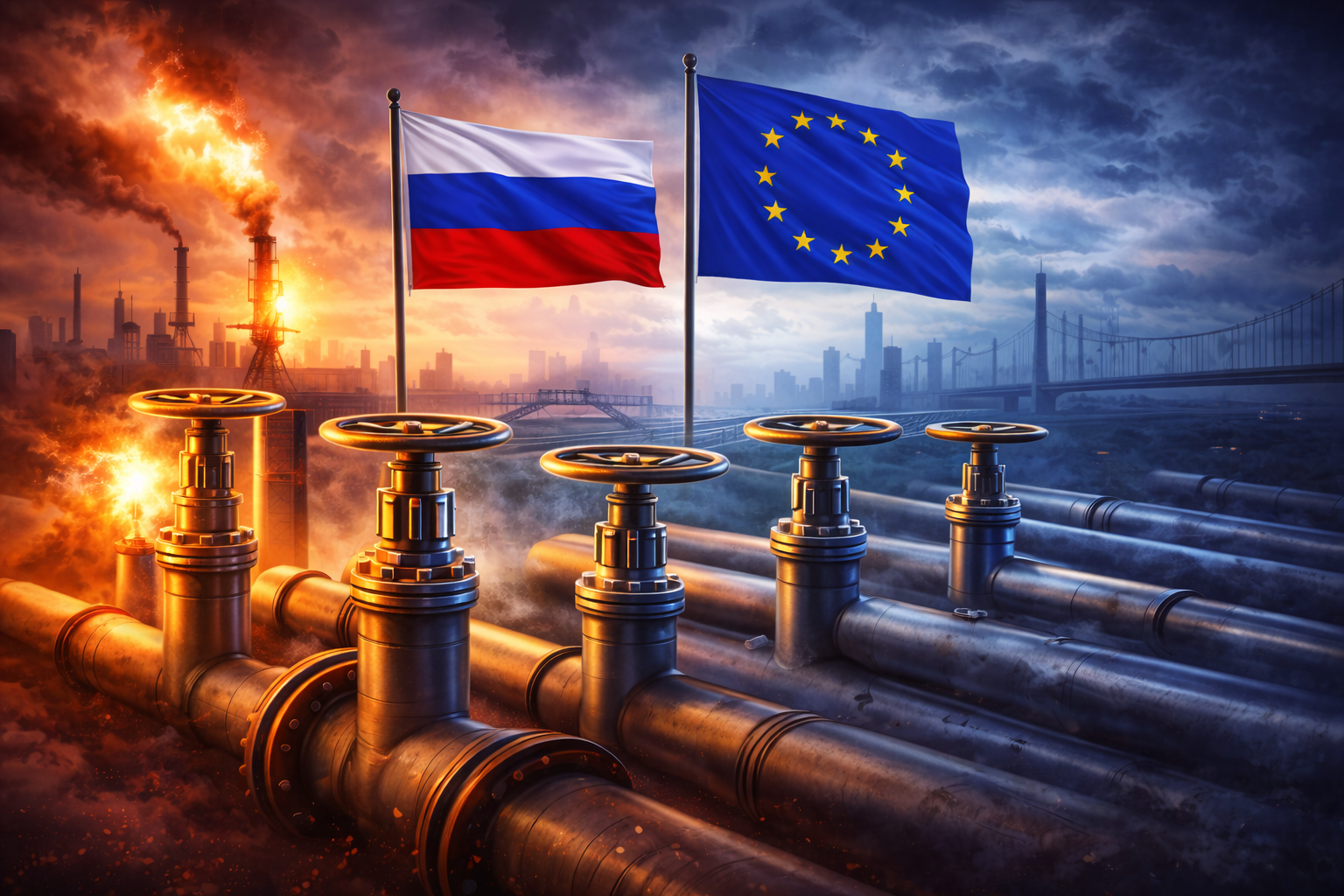
Europe’s energy supply is once again under pressure. Several geopolitical developments—particularly tensions between Russia and Ukraine, as well as the escalation of conflict involving Iran—have exposed the structural weaknesses of European energy policy.
This is not simply a single crisis, but rather a deeper, long-term issue: Europe’s reliance on energy imports and the difficulty of reducing that dependence in a sustainable way.
1. Europe’s Relationship with Russia: An Ongoing Challenge
For many years, Russia was one of Europe’s key energy suppliers, especially in natural gas. This close economic relationship has been significantly strained by political tensions and the war in Ukraine.
As a result, many EU countries have reduced their direct energy imports from Russia and sought alternative suppliers. However, connections still exist—whether through indirect trade flows or existing infrastructure.
This highlights a key reality:
A complete decoupling is complex and comes with significant economic and logistical challenges.
2. The Iran Conflict and Its Global Impact
At the same time, tensions involving Iran are adding further uncertainty to global energy markets. The region plays a crucial role in global oil and gas transport, particularly through the Strait of Hormuz.
Disruptions in this area can:
rapidly affect global oil prices
interrupt supply chains
increase market volatility
For Europe, this means:
Even with diversified supply sources, it remains indirectly exposed to global developments.
3. Structural Dependence Remains
Regardless of individual crises, one fundamental fact remains:
Europe imports a significant share of its energy.
This dependence means that external events—political tensions, conflicts, or market shifts—have direct consequences for prices, supply security, and economic stability.
Energy is therefore not just an economic issue, but also closely tied to geopolitical dynamics.
4. Different Starting Points Within the EU
The situation varies significantly across EU member states:
Some countries have well-developed LNG infrastructure
Others rely more heavily on pipeline gas
Some prioritize nuclear energy, while others focus on renewables
These differences make a unified European approach difficult. National interests, economic structures, and political priorities all play a major role.
5. Political and Economic Challenges
Current developments present several key challenges for the EU and its member states:
Ensuring stable energy supply
Managing price volatility
Expanding alternative energy sources
Modernizing infrastructure
Improving coordination between member states
Balancing short-term measures (such as securing supply) with long-term strategies (such as energy transition) remains a central task.
6. Autonomy as a Long-Term Objective
“Energy autonomy” is often described as a strategic goal. In practice, however, it does not mean complete independence, but rather:
broader diversification of energy sources
increased use of domestic resources
reduced strategic vulnerabilities
Renewable energy expansion plays a key role here, along with emerging technologies such as hydrogen and energy storage.
Conclusion: Between Reality and Ambition
The current situation makes clear that Europe’s energy policy remains heavily influenced by external factors. Developments involving Russia and the Middle East cannot be viewed in isolation—they both have direct or indirect effects on Europe’s energy landscape.
The core challenge for Europe is to strike a balance between:
economic efficiency
supply security
and long-term strategic autonomy
Whether this can be achieved will largely depend on how consistently and collectively EU member states act in the years ahead.
This is not simply a single crisis, but rather a deeper, long-term issue: Europe’s reliance on energy imports and the difficulty of reducing that dependence in a sustainable way.
1. Europe’s Relationship with Russia: An Ongoing Challenge
For many years, Russia was one of Europe’s key energy suppliers, especially in natural gas. This close economic relationship has been significantly strained by political tensions and the war in Ukraine.
As a result, many EU countries have reduced their direct energy imports from Russia and sought alternative suppliers. However, connections still exist—whether through indirect trade flows or existing infrastructure.
This highlights a key reality:
A complete decoupling is complex and comes with significant economic and logistical challenges.
2. The Iran Conflict and Its Global Impact
At the same time, tensions involving Iran are adding further uncertainty to global energy markets. The region plays a crucial role in global oil and gas transport, particularly through the Strait of Hormuz.
Disruptions in this area can:
rapidly affect global oil prices
interrupt supply chains
increase market volatility
For Europe, this means:
Even with diversified supply sources, it remains indirectly exposed to global developments.
3. Structural Dependence Remains
Regardless of individual crises, one fundamental fact remains:
Europe imports a significant share of its energy.
This dependence means that external events—political tensions, conflicts, or market shifts—have direct consequences for prices, supply security, and economic stability.
Energy is therefore not just an economic issue, but also closely tied to geopolitical dynamics.
4. Different Starting Points Within the EU
The situation varies significantly across EU member states:
Some countries have well-developed LNG infrastructure
Others rely more heavily on pipeline gas
Some prioritize nuclear energy, while others focus on renewables
These differences make a unified European approach difficult. National interests, economic structures, and political priorities all play a major role.
5. Political and Economic Challenges
Current developments present several key challenges for the EU and its member states:
Ensuring stable energy supply
Managing price volatility
Expanding alternative energy sources
Modernizing infrastructure
Improving coordination between member states
Balancing short-term measures (such as securing supply) with long-term strategies (such as energy transition) remains a central task.
6. Autonomy as a Long-Term Objective
“Energy autonomy” is often described as a strategic goal. In practice, however, it does not mean complete independence, but rather:
broader diversification of energy sources
increased use of domestic resources
reduced strategic vulnerabilities
Renewable energy expansion plays a key role here, along with emerging technologies such as hydrogen and energy storage.
Conclusion: Between Reality and Ambition
The current situation makes clear that Europe’s energy policy remains heavily influenced by external factors. Developments involving Russia and the Middle East cannot be viewed in isolation—they both have direct or indirect effects on Europe’s energy landscape.
The core challenge for Europe is to strike a balance between:
economic efficiency
supply security
and long-term strategic autonomy
Whether this can be achieved will largely depend on how consistently and collectively EU member states act in the years ahead.