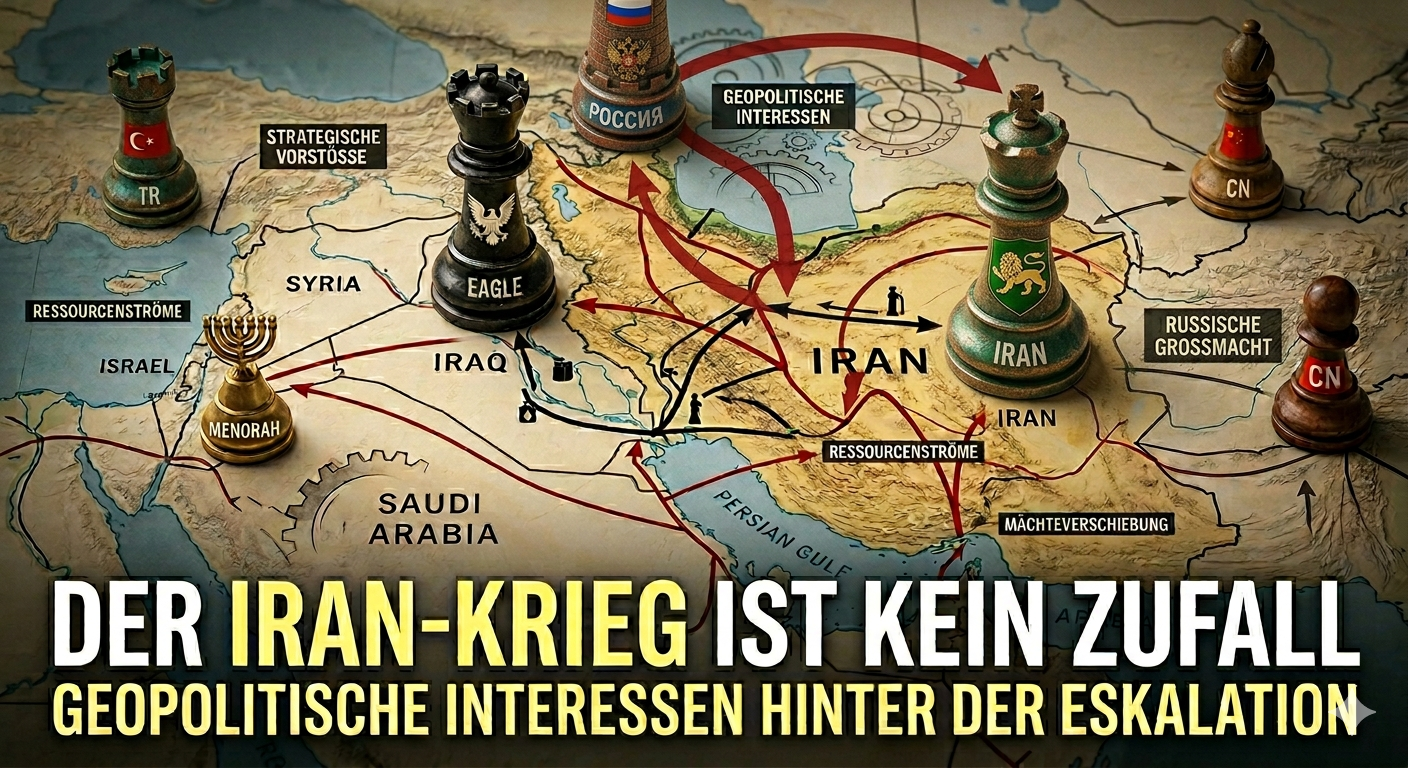
Anyone who looks at international conflicts purely through an emotional lens will inevitably arrive at simplified and often misleading conclusions. The current tensions surrounding Iran are not an isolated event and certainly not a coincidence. Rather, they reflect long-term geopolitical strategies that become visible when analyzed objectively.
Geopolitics Over Morality
In international politics, morality is rarely the primary driver—power, resources, and spheres of influence are. States act primarily in their own interest. This applies to all major actors: the United States, China, Russia, as well as regional powers such as Israel and the Gulf states.
A key reference point for understanding Western, particularly American, foreign policy is the historical Monroe Doctrine. Originally limited to the Western Hemisphere, it developed a broader strategic logic: securing spheres of influence and deterring external rivals. In modern U.S. foreign policy, this logic can be seen in a globalized form—especially in strategies aimed at containing rising powers such as China and Russia.
Containing China, Russia, and the BRICS
Today, the strategic focus of the United States is increasingly centered on maintaining its global position in a shifting world order. Particular attention is given to:
China as the primary economic competitor
Russia as a military and energy power
BRICS countries as a growing bloc outside Western dominance
A key instrument in this context is the influence over resource flows and trade routes.
Resources as a Geopolitical Factor
A look at Venezuela illustrates how deeply energy policy is intertwined with geopolitical interests. Iran plays an even more critical role:
a major energy producer
strategically located between Central Asia, the Middle East, and key maritime routes
a crucial factor in regional stability and global markets
Destabilizing Iran therefore has consequences far beyond the region.
The Middle East as a Strategic Energy Hub
For decades, the Middle East has been a central energy supplier for Asian markets. Escalation in this region directly impacts:
China, which depends heavily on energy imports (around 66%)
global supply chains
energy prices worldwide
China’s limited strategic reserves further highlight its vulnerability to disruptions.
Russia and Access to the South
For Russia, Iran is also of strategic importance. Through Iran, Russia gains:
alternative trade routes
access to southern markets
connections to the Indian Ocean
Instability in Iran can therefore also affect Russia’s geopolitical flexibility.
Israel’s Role and Strategic Interests
Israel, like any state, pursues its own security and strategic interests. These include:
ensuring its national security in a complex regional environment
controlling strategically relevant areas
expanding its strategic depth and influence
Within Israeli political and security debates, it is repeatedly evident that extending control and influence in its immediate region can be seen as part of long-term security considerations.
This is not an exception but rather a common pattern in international politics:
states seek to increase their strategic depth and keep potential threats as far away from their own borders as possible.
Conclusion: A Conflict Within a Larger Framework
The tensions surrounding Iran are not an isolated conflict but part of broader global developments:
competition over resources
shifts in geopolitical power balances
control of trade routes
regional security strategies
A sober, analytical perspective makes one thing clear:
Conflicts rarely arise by chance—they are often the result of long-term strategic developments and structural interests.
Geopolitics Over Morality
In international politics, morality is rarely the primary driver—power, resources, and spheres of influence are. States act primarily in their own interest. This applies to all major actors: the United States, China, Russia, as well as regional powers such as Israel and the Gulf states.
A key reference point for understanding Western, particularly American, foreign policy is the historical Monroe Doctrine. Originally limited to the Western Hemisphere, it developed a broader strategic logic: securing spheres of influence and deterring external rivals. In modern U.S. foreign policy, this logic can be seen in a globalized form—especially in strategies aimed at containing rising powers such as China and Russia.
Containing China, Russia, and the BRICS
Today, the strategic focus of the United States is increasingly centered on maintaining its global position in a shifting world order. Particular attention is given to:
China as the primary economic competitor
Russia as a military and energy power
BRICS countries as a growing bloc outside Western dominance
A key instrument in this context is the influence over resource flows and trade routes.
Resources as a Geopolitical Factor
A look at Venezuela illustrates how deeply energy policy is intertwined with geopolitical interests. Iran plays an even more critical role:
a major energy producer
strategically located between Central Asia, the Middle East, and key maritime routes
a crucial factor in regional stability and global markets
Destabilizing Iran therefore has consequences far beyond the region.
The Middle East as a Strategic Energy Hub
For decades, the Middle East has been a central energy supplier for Asian markets. Escalation in this region directly impacts:
China, which depends heavily on energy imports (around 66%)
global supply chains
energy prices worldwide
China’s limited strategic reserves further highlight its vulnerability to disruptions.
Russia and Access to the South
For Russia, Iran is also of strategic importance. Through Iran, Russia gains:
alternative trade routes
access to southern markets
connections to the Indian Ocean
Instability in Iran can therefore also affect Russia’s geopolitical flexibility.
Israel’s Role and Strategic Interests
Israel, like any state, pursues its own security and strategic interests. These include:
ensuring its national security in a complex regional environment
controlling strategically relevant areas
expanding its strategic depth and influence
Within Israeli political and security debates, it is repeatedly evident that extending control and influence in its immediate region can be seen as part of long-term security considerations.
This is not an exception but rather a common pattern in international politics:
states seek to increase their strategic depth and keep potential threats as far away from their own borders as possible.
Conclusion: A Conflict Within a Larger Framework
The tensions surrounding Iran are not an isolated conflict but part of broader global developments:
competition over resources
shifts in geopolitical power balances
control of trade routes
regional security strategies
A sober, analytical perspective makes one thing clear:
Conflicts rarely arise by chance—they are often the result of long-term strategic developments and structural interests.